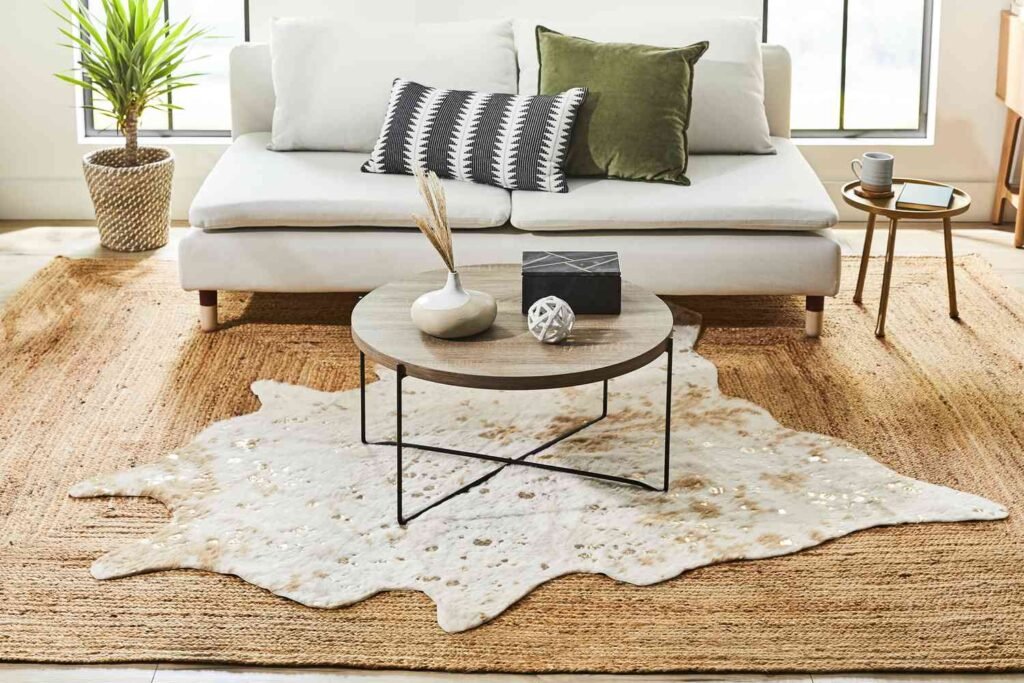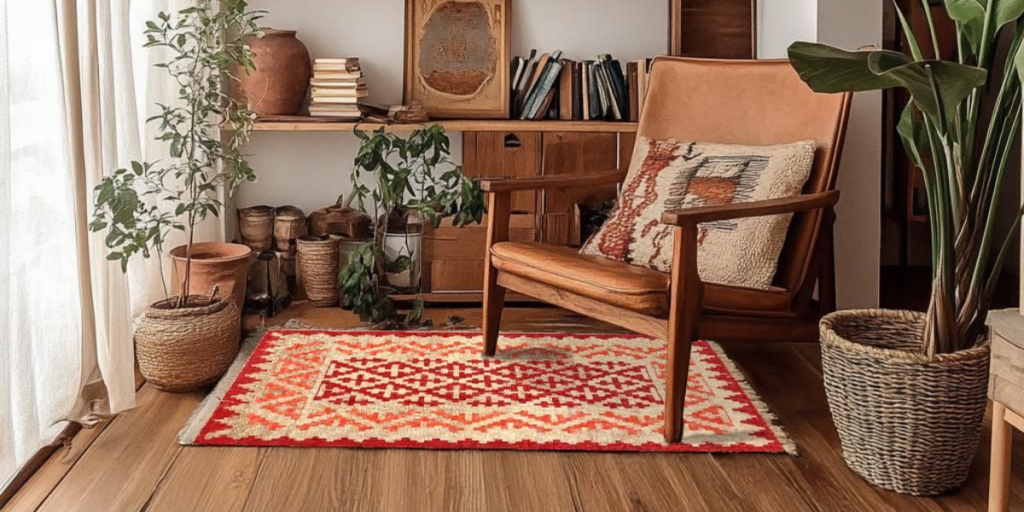
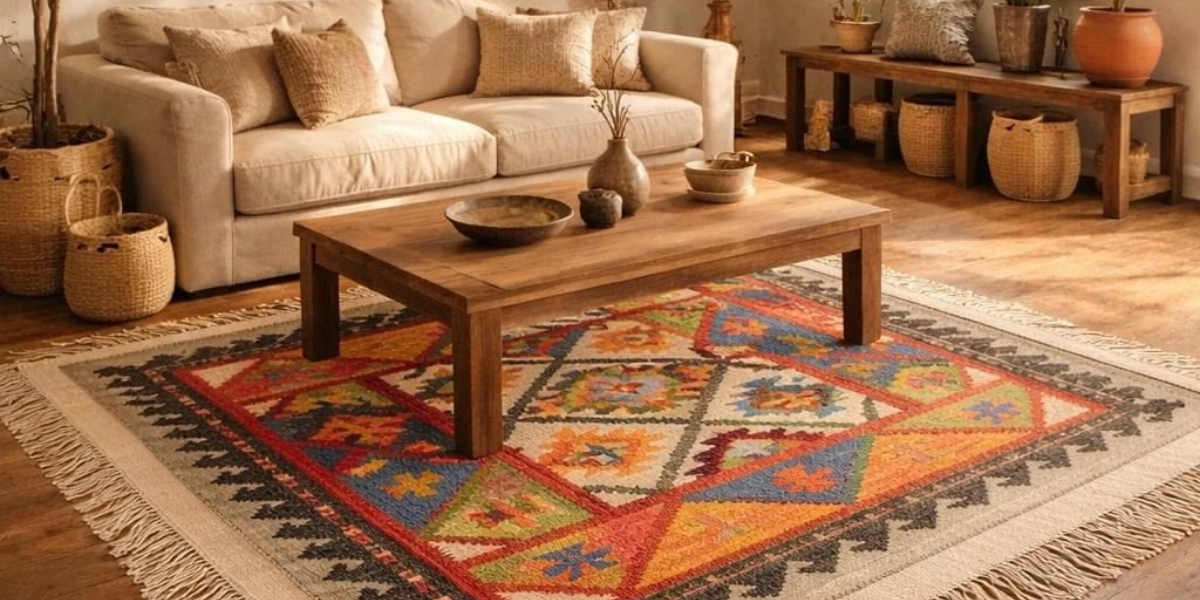
Choosing the right kilim rug size can completely change how a room looks and feels. A rug that is too small may make the furniture appear disconnected, while one that is too large can overwhelm the available space. The best size depends on the room dimensions, furniture layout, and how much visible flooring you want around the edges. Since kilim rugs have a flatwoven construction, they fit easily beneath sofas, beds, dining tables, and office furniture. Careful measuring before buying will help you choose a rug that feels balanced, practical, and intentional.
What Is the Best Size for a Rug?
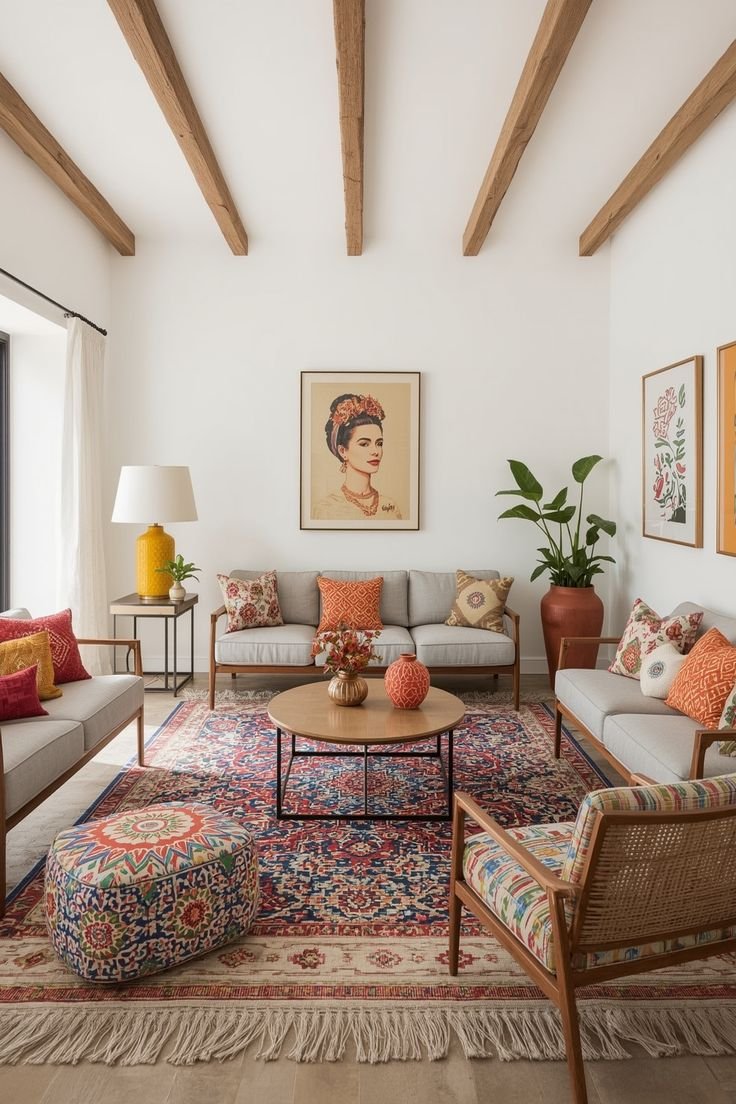
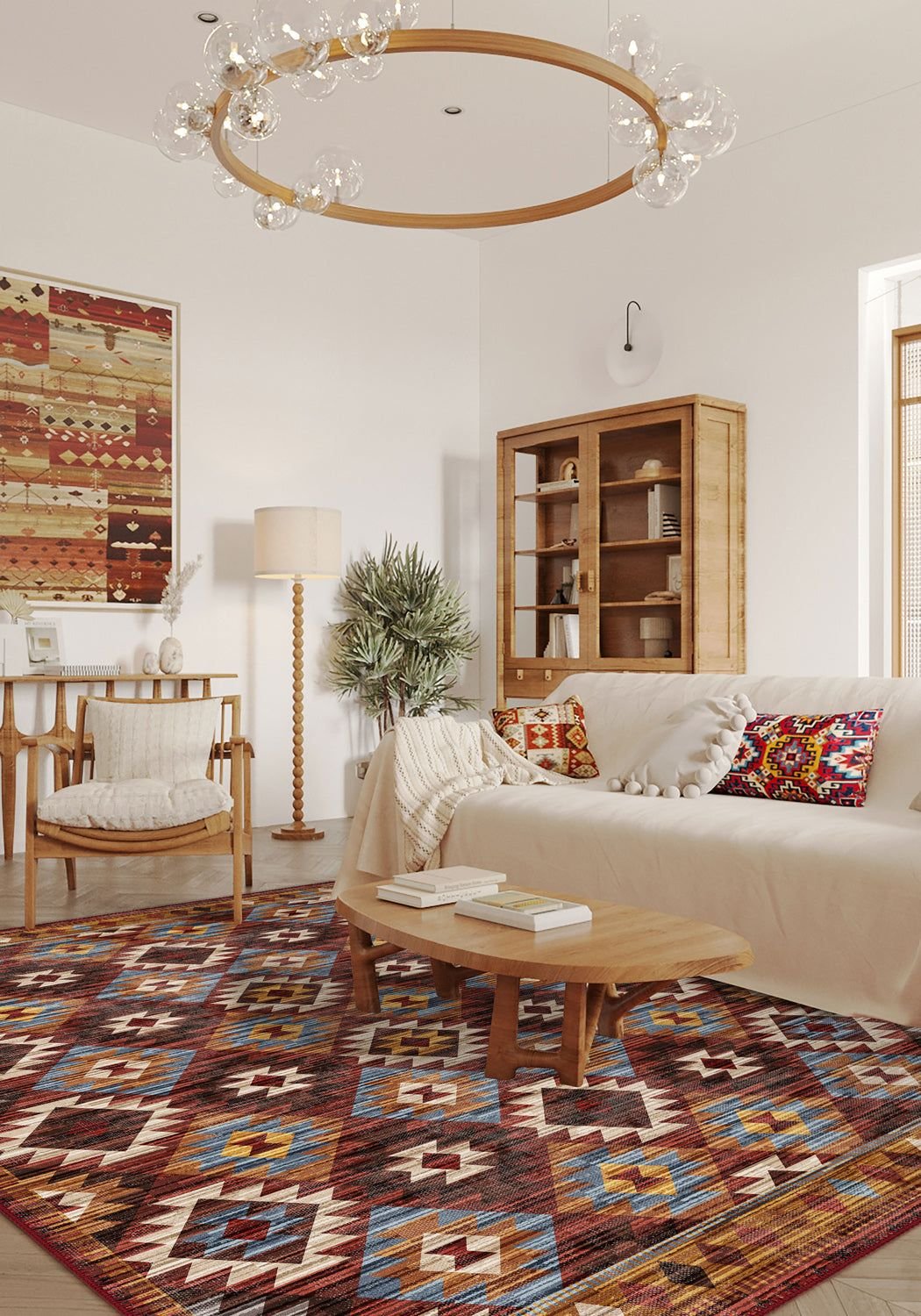
The best rug size is one that connects the main furniture pieces without covering the entire floor. For most rooms, the rug should sit beneath at least part of the furniture rather than floating alone in the centre.
Common kilim rug sizes include:
- 3 × 5 feet: Best for entryways, beside beds, or small seating areas.
- 4 × 6 feet: Suitable for compact bedrooms, reading corners, and home offices.
- 5 × 7 feet: Works in small living rooms, bedrooms, or beneath a small dining table.
- 5 × 8 feet: A versatile option for modest living rooms and bedrooms.
- 6 × 9 feet: Suitable for medium-sized living rooms, bedrooms, and dining spaces.
- 8 × 10 feet: A popular choice for larger living rooms, queen bedrooms, and six-seat dining tables.
- 9 × 12 feet: Ideal for spacious living rooms, king bedrooms, and large dining areas.
- Kilim runners: Best for hallways, narrow entryways, kitchens, and spaces beside a bed.
In a large room, the rug should normally be big enough to hold the front legs of the main furniture. Smaller rugs can work as decorative accents, but they should still relate clearly to the surrounding furniture.
How to Choose the Right Kilim Rug Size?
Choosing the right kilim rug size starts with the room layout, furniture placement, and how much floor you want to remain visible. Use these steps before ordering:
- Measure the Entire Room: Record the room’s full length and width so you understand how much space is available. This helps prevent choosing a rug that looks too small or overwhelms the room.
- Measure the Furniture Area: Focus on the space occupied by the sofa, bed, dining table, or desk. The rug should visually connect the main furniture rather than sit alone in the centre.
- Decide Which Furniture Legs Will Sit on the Rug: In a living room, you can place all furniture legs on the rug or only the front legs of the sofa and chairs. In a bedroom, the rug can sit beneath the entire bed or only the lower two-thirds.
- Use Painter’s Tape to Mark the Size: Outline the rug dimensions on the floor before buying. This makes it easier to see whether the rug will feel balanced within the room.
- Leave an Even Border of Flooring: Keep a similar amount of visible floor around each side of the rug. Uneven spacing can make the room look poorly arranged.
- Allow Space for Chair Movement: In dining rooms and offices, the rug should extend far enough for chairs to remain on it when pulled back. This prevents chair legs from catching on the edges.
- Check Door Clearance: Make sure doors can open and close freely without rubbing against the rug. Kilim rugs are flatwoven, but measuring clearance is still important.
- Consider the Rug Pattern: Kilim rugs often feature bold geometric motifs. Choose a size that keeps the main pattern visible instead of hiding most of it beneath furniture.
What Size Kilim Rug Is Best for a Living Room?
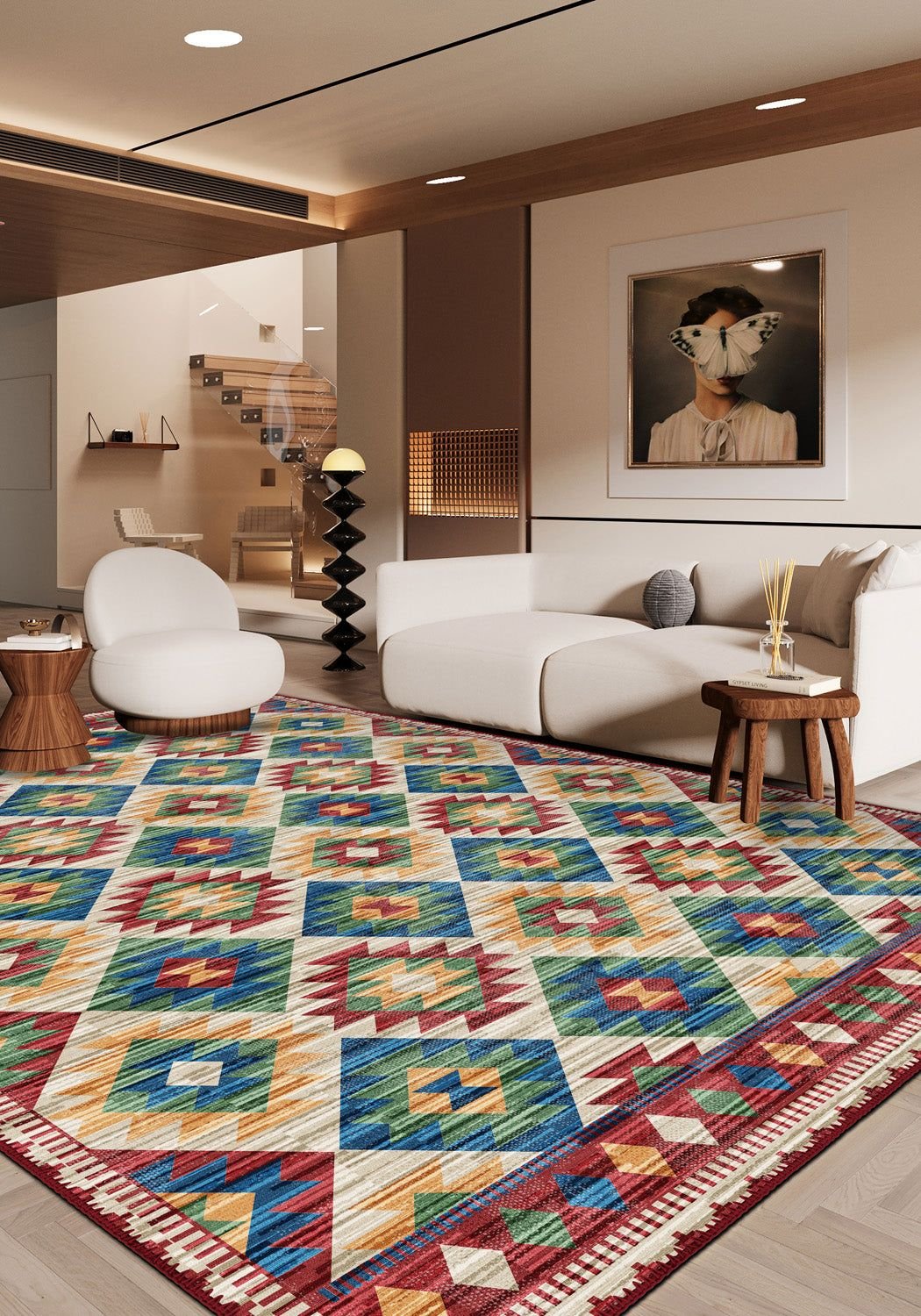
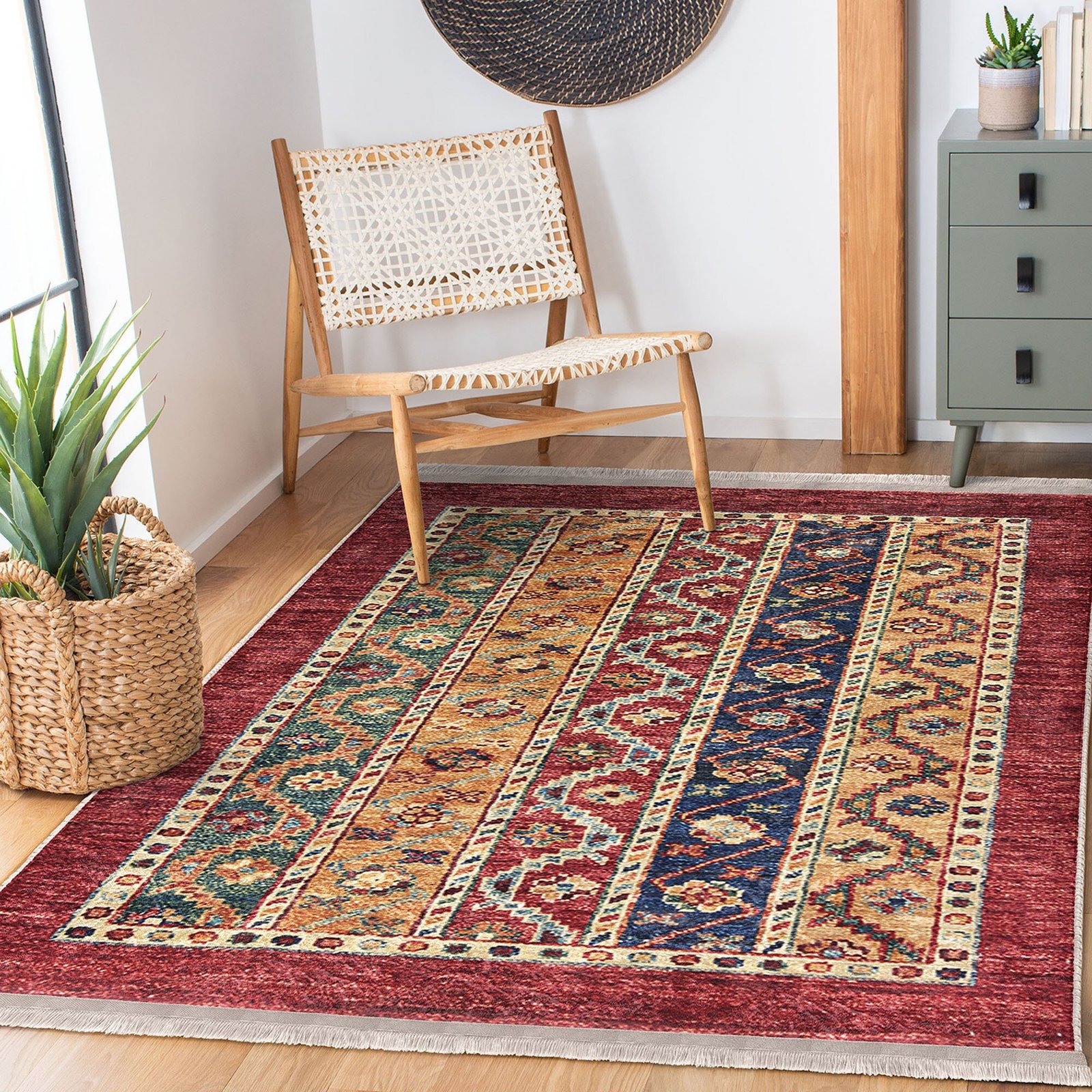
For most living rooms, a 6 × 9, 8 × 10, or 9 × 12-foot kilim rug provides the best proportions. The correct choice depends on the size of the room and how the sofa and chairs are arranged. There are three common living room layouts:
- All furniture on the rug: This layout works well in large living rooms and open-plan spaces. An 8 × 10 or 9 × 12 rug is usually needed so the sofa, chairs, and coffee table can all sit comfortably on it.
- Front furniture legs on the rug: This is the most flexible arrangement for medium-sized rooms. The front legs of the sofa and chairs rest on the rug, while the back legs remain on the floor. A 6 × 9 or 8 × 10 rug often works well.
- Coffee table only on the rug: A smaller rug may sit beneath the coffee table without reaching the sofa. This can work in compact rooms, but the rug should still be large enough to feel connected to the seating area.
A kilim rug is particularly useful in living rooms because its flat weave fits easily beneath furniture and does not add excessive bulk. Its patterns can also introduce colour and texture without making the room feel heavy.
Is a 5 × 7 Rug Too Small for a Living Room?
A 5 × 7 rug is not always too small for a living room, but it works best in a compact space. It may be suitable for an apartment living room, a small seating area, or a room with a loveseat and one or two chairs. In most cases, a 5 × 7 rug will sit beneath the coffee table, with the edges reaching towards the surrounding seating. The front legs of a small sofa may also fit on it, depending on the furniture arrangement. However, a 5 × 7 rug may look undersized in a large room or beneath a full three-piece seating set. When a rug leaves too much empty space between itself and the furniture, the room can feel disconnected. In a medium or large living room, a 6 × 9 or 8 × 10 rug will usually create a more balanced result.
Is a 5 by 7 Rug Big Enough for a Bedroom?
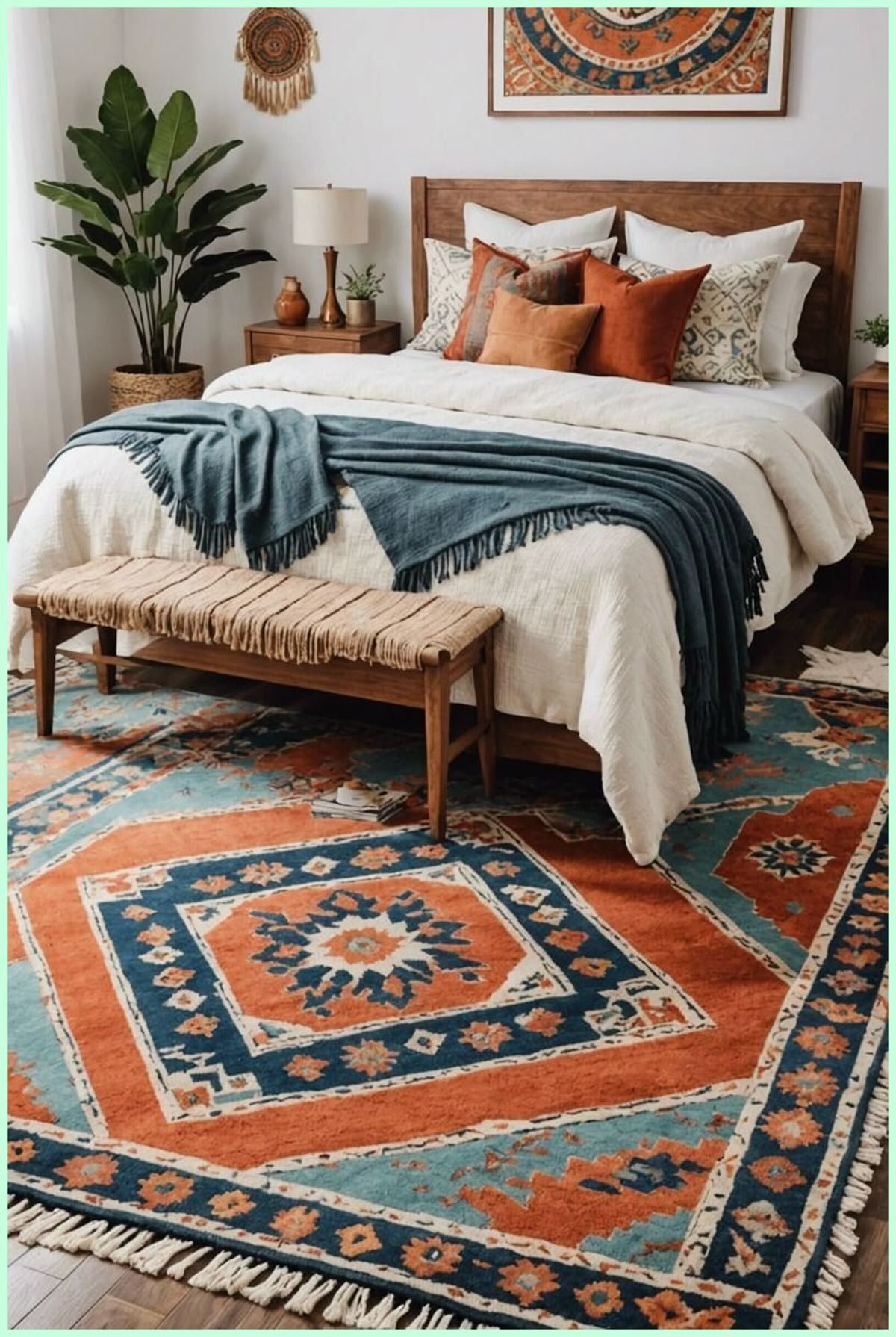
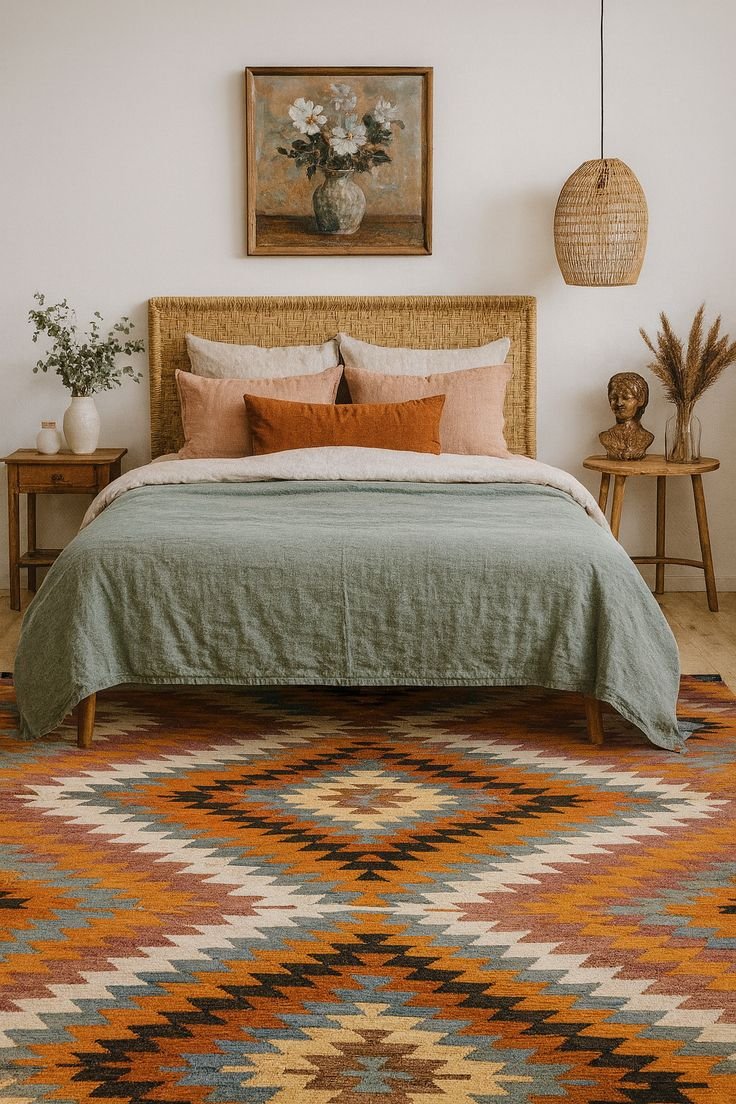
A 5 × 7 rug can be big enough for a small bedroom, particularly when used beneath a twin or full-size bed. It can also be placed horizontally beneath the lower half of the bed, allowing part of the rug to remain visible at the sides and foot. For a queen-size bed, a 5 × 7 rug is generally too small to sit beneath the entire bed. However, it can still work as an accent rug at the foot of the bed or beside it.
A 5 × 7 rug may suit:
- A twin bedroom
- A small guest room
- A child’s bedroom
- The foot of a queen bed
- A reading corner
- An open area beside a bed
For larger beds, choose a rug that extends far enough beyond the sides to provide a comfortable landing area when getting out of bed.
What Size Are Most Bedroom Rugs?
Most bedroom rugs range from 5 × 7 to 9 × 12 feet, depending on the bed size and room dimensions. The rug should frame the bed while leaving enough of the design visible around it. For a twin bed, a 5 × 7 rug usually provides sufficient coverage. A 6 × 9 rug works well beneath a full or double bed, while an 8 × 10 rug is typically the best choice for a queen bed. For a king bed, a 9 × 12 rug usually creates the most balanced look. A Turkish Kilim Rug is a beautiful choice for bedrooms because its flatwoven construction fits neatly beneath the bed, while its traditional geometric patterns add warmth, colour, and character to the space. Position it beneath the lower two-thirds of the bed so enough of the design remains visible on both sides and at the foot.
What Size Kilim Rug Is Best for a Hallway?
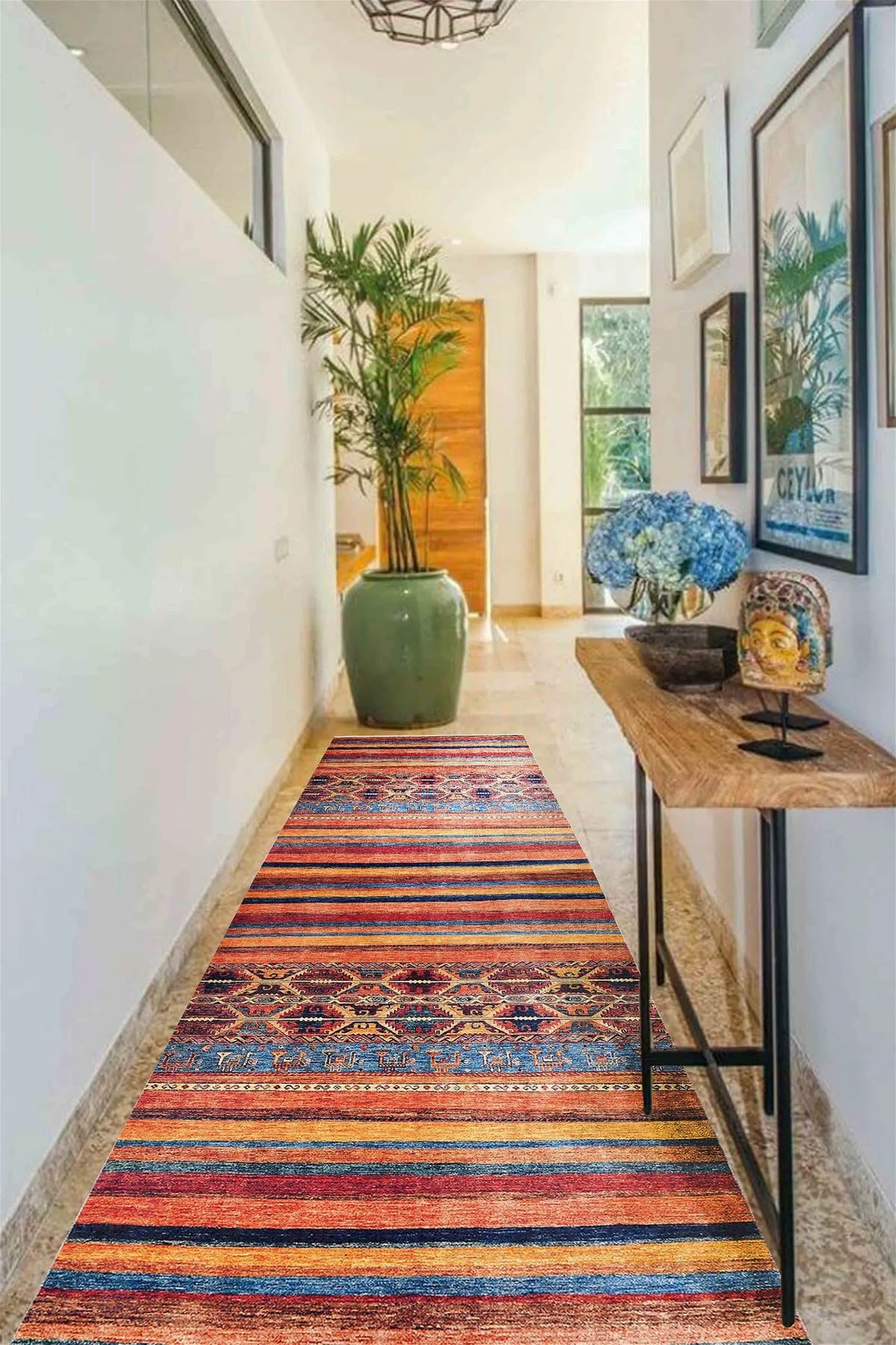
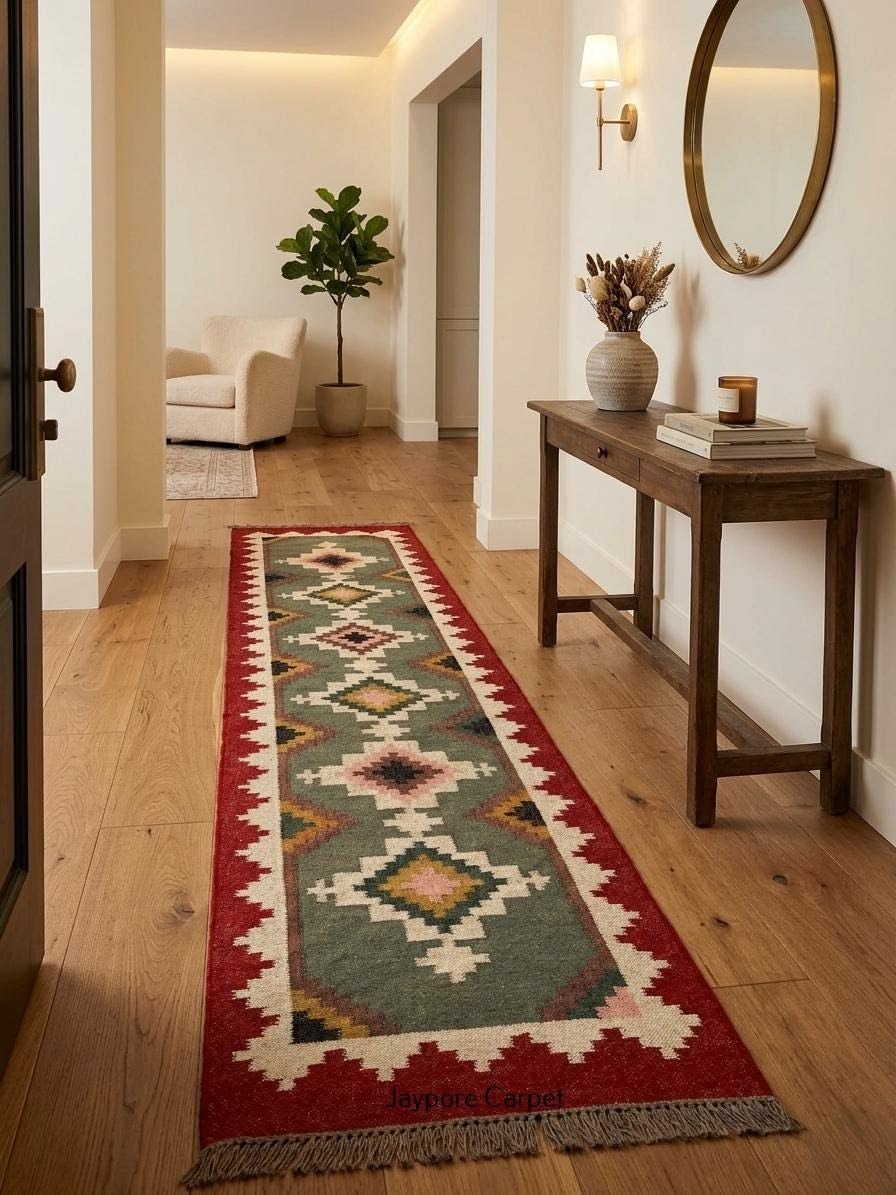
A 2 × 8-foot or 2.5 × 10-foot kilim runner is usually the best size for a standard hallway because it covers most of the walking area without making the space feel crowded. A shorter 2 × 6-foot runner works well in compact hallways, while longer corridors may need a 10-foot runner or more. The rug should sit in the centre of the hallway, with a few inches of visible flooring along both sides and a balanced gap at each end. This creates a clean, proportionate look while allowing doors to open freely.
What Is the Best Size Rug for a 12 × 12 Room?
For a 12 × 12-foot room, an 8 × 10 rug is usually the best all-purpose size. It provides substantial floor coverage while leaving a visible border around the edges.
The final choice depends on how the room is used:
- Living room: An 8 × 10 rug can accommodate the front legs of a sofa and chairs. A 9 × 12 rug may work when you want most of the furniture placed on the rug.
- Bedroom: An 8 × 10 rug works well beneath a queen bed. For a king bed, a 9 × 12 rug may provide better coverage.
- Dining room: An 8 × 10 rug can suit a table with six chairs, provided the chairs remain on the rug when pulled out.
- Home office: A 6 × 9 or 8 × 10 rug can cover the desk and chair area comfortably.
A smaller 5 × 7 rug may look isolated in a 12 × 12 room unless it is being used to define a compact seating or reading area. For the most balanced appearance, choose a rug large enough to connect the main furniture while leaving a consistent border of flooring around the room.
WRAP up

Kilim rugs collection
Explore a diverse collection of rugs crafted for style and durability. From kilims to modern designs, find your perfect rug at Kilim Provenance.
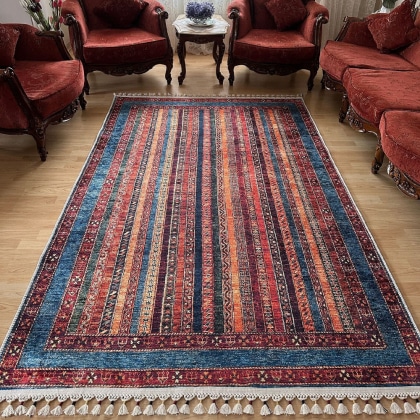
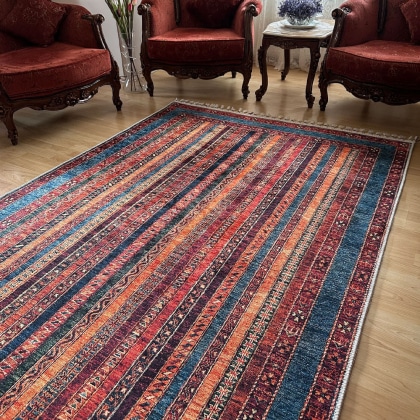
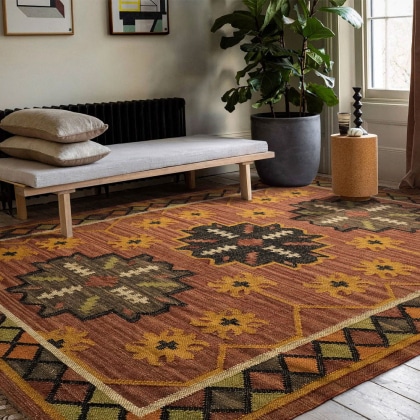

The right kilim rug size depends on the room dimensions, furniture arrangement, and how much of the floor you want to keep visible. Smaller sizes such as 3 × 5 and 5 × 7 work well in entryways, beside beds, and in compact rooms. Larger 8 × 10 and 9 × 12 rugs are better for connecting furniture in living rooms, bedrooms, and dining spaces. Before ordering, measure carefully and use painter’s tape to visualise the rug’s placement. Explore our collection of handcrafted kilim rugs, along with distinctive kilim pillows, ottomans, and poufs, to find the right size, colour, and pattern for every room in your home.