Moroccan kilim rugs are known for their flatwoven construction, geometric patterns, natural textures, and traditional craftsmanship. However, not every rug marketed as “Moroccan style” or “kilim inspired” is an authentic handmade piece. An authentic Moroccan kilim rug is typically handwoven rather than printed or machine-made, with the design formed directly through the weave. Small irregularities, visible weaving details, natural fibres, and a pattern that can often be seen clearly from both sides are some of the strongest clues. Before buying one, it helps to understand how genuine kilims are constructed, which materials are traditionally used, and what details distinguish handmade craftsmanship from mass-produced imitations.
What Is a Moroccan Kilim Rug?
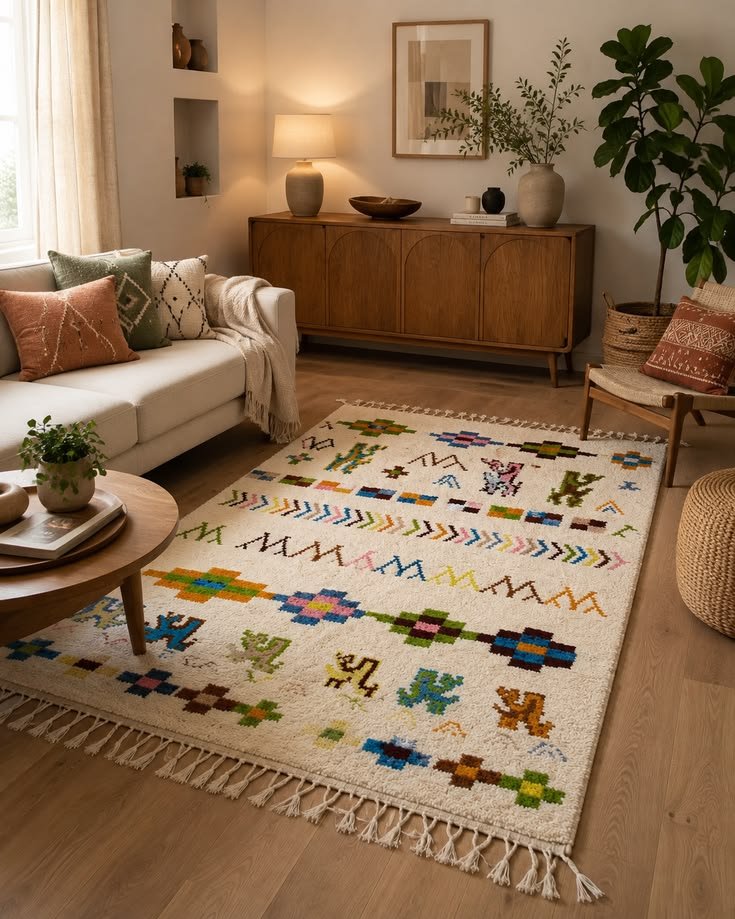
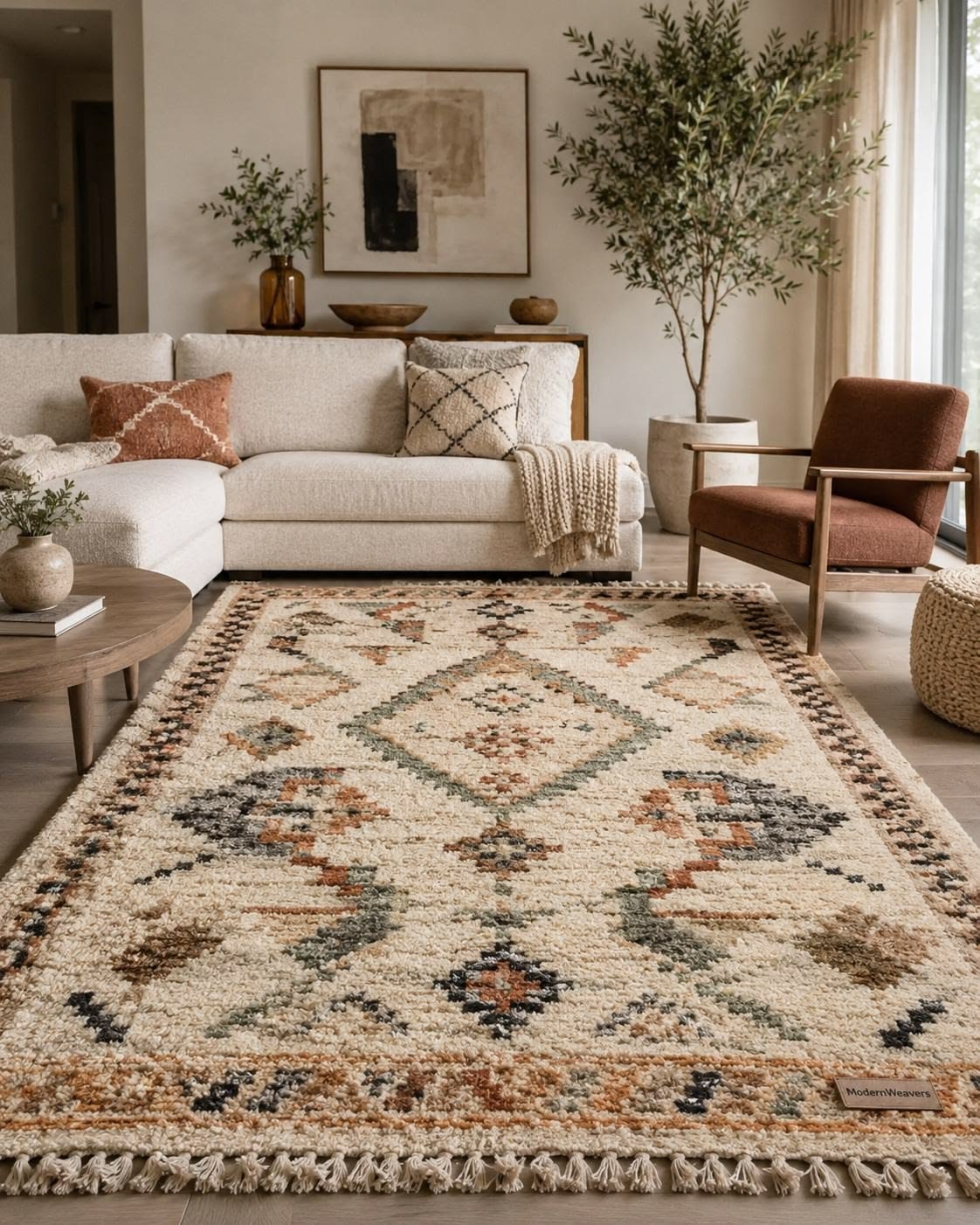
A Moroccan kilim rug is a flatwoven rug traditionally made using interlaced warp and weft threads rather than a raised knotted pile. Because there is no thick pile on the surface, kilims are generally thinner, lighter, and flatter than many traditional Moroccan pile rugs. The pattern is created as part of the weaving process rather than being printed onto the finished rug. This construction often produces bold geometric motifs, stripes, diamonds, zigzags, and other repeating shapes. Moroccan kilims are sometimes also associated with the term hanbel, which refers to traditional Moroccan flatwoven textiles. Their lightweight structure makes them versatile enough for living rooms, bedrooms, dining areas, hallways, and even decorative wall displays.
What Is Special About Moroccan Rugs?
Moroccan rugs are special because they combine traditional handcraft, regional weaving techniques, distinctive patterns, and natural materials. Many designs have developed through generations of weaving traditions, which is why handmade rugs can show variations that make individual pieces look slightly different from one another.
Several features contribute to their distinctive character:
- Handcrafted Construction: Traditional Moroccan rugs are made by hand rather than produced entirely by automated machinery.
- Distinctive Patterns: Diamonds, lines, triangles, chevrons, and other geometric forms frequently appear in Moroccan textiles.
- Natural Texture: Wool and other natural fibres create a surface that looks and feels different from synthetic machine-made rugs.
- Individual Variation: Handmade weaving can create small differences in line thickness, spacing, colour, and symmetry.
- Regional Character: Different Moroccan weaving communities have developed their own construction methods, colours, and visual traditions.
- Versatile Styling: Their mix of natural texture and graphic patterns allows Moroccan rugs to work in traditional, bohemian, minimalist, rustic, and contemporary interiors.
How to Tell if a Moroccan Rug Is Real?
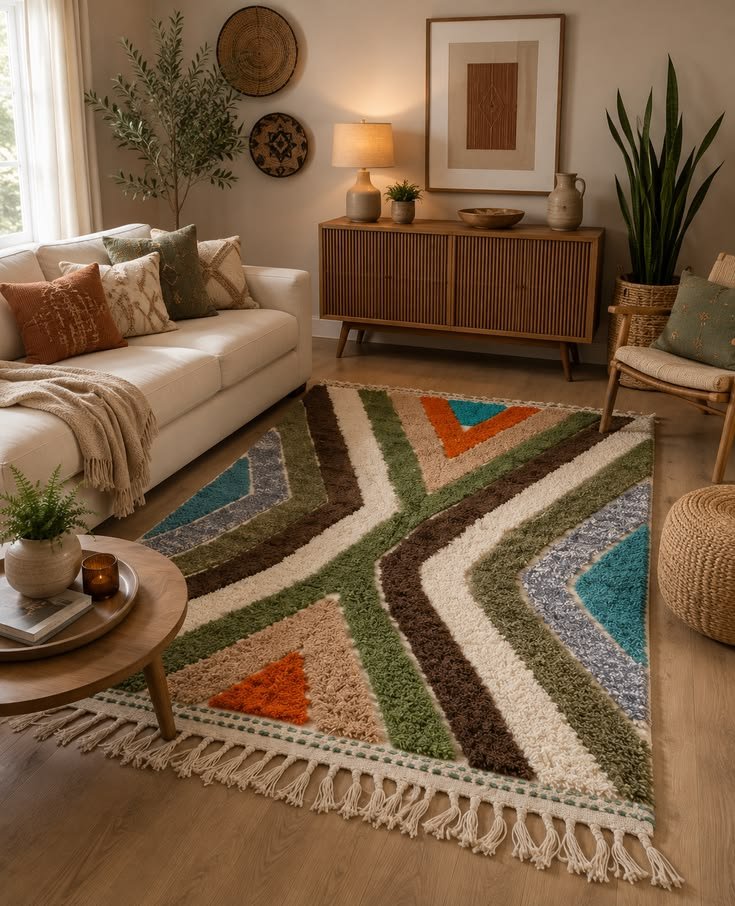
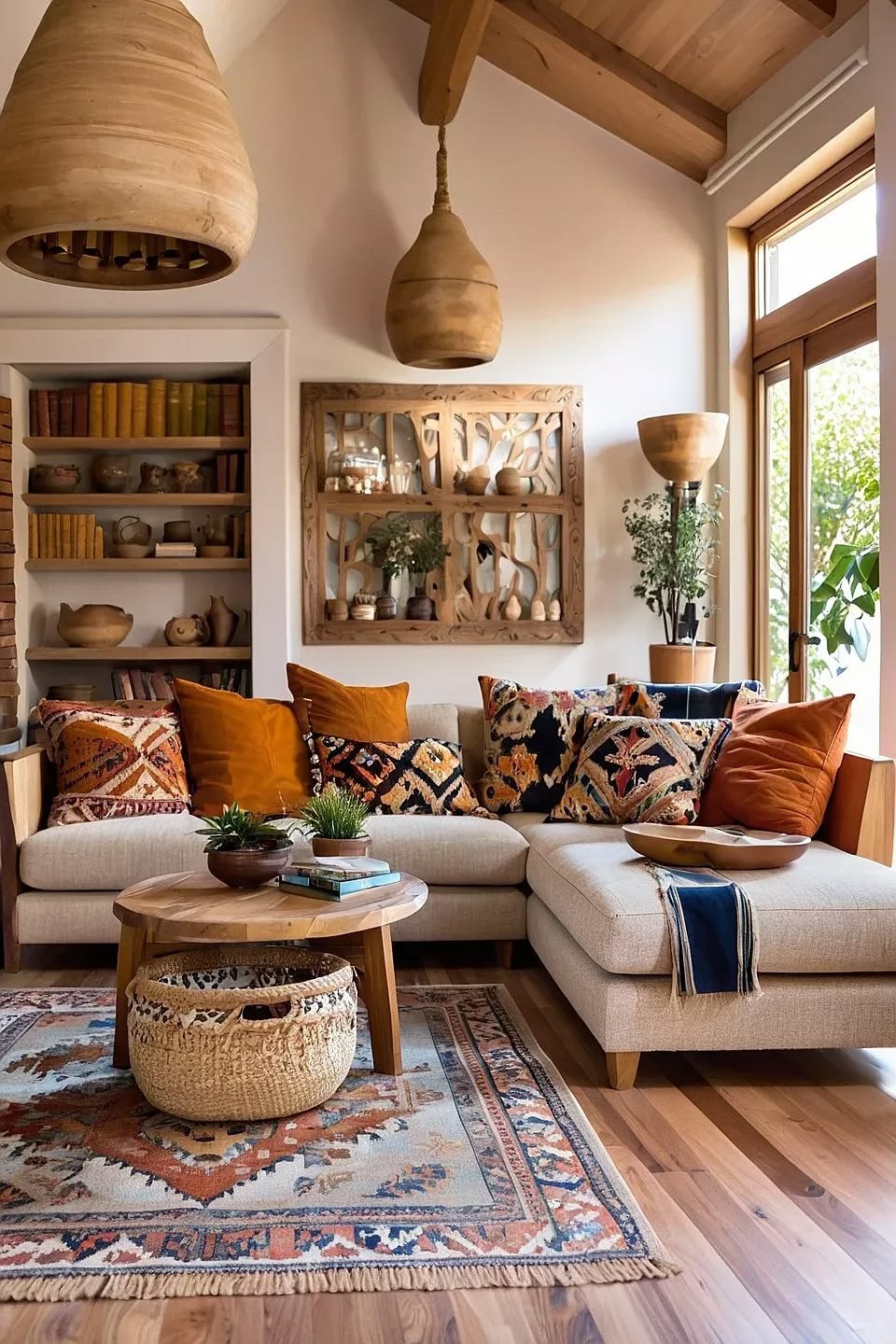
To identify an authentic Moroccan kilim rug, look closely at how the rug is woven rather than judging authenticity from the pattern alone. Machine-made rugs can reproduce Moroccan-style motifs very accurately, but construction details are much harder to imitate.
The following checks can help:
- Turn the Rug Over: On a genuine flatwoven kilim, the pattern should usually remain clearly visible on the reverse because the coloured threads form the design throughout the weave. A printed rug may have a noticeably different or plain-looking back.
- Examine the Weave: Kilims are woven flat without a raised pile. Look closely at how the coloured threads interlock instead of sitting as a printed surface layer.
- Look for Small Irregularities: Handmade rugs rarely have completely mechanical spacing. Slight variations in pattern alignment, yarn thickness, or weave density can indicate handwork.
- Check the Pattern Carefully: Extremely perfect repetition is not automatically proof that a rug is machine-made, but a design that appears unnaturally uniform should encourage a closer inspection.
- Feel the Surface: Natural fibres usually have more variation in texture than synthetic fibres. The rug should feel woven rather than like a printed fabric surface.
- Inspect the Edges: Handmade construction should look integrated with the rug rather than appearing as if decorative edges have simply been attached afterward.
- Check Both Sides: A traditional flatweave is often visually usable from either side because there is no thick pile hiding the reverse construction.
- Ask About Origin: A reliable seller should be able to provide useful information about where the rug was produced, its materials, and how it was made.
What Material Are Moroccan Rugs Made Of?
Moroccan rugs are traditionally made from natural fibres, although the exact material depends on the region, weaving technique, and type of rug. The most common materials include:
- Wool: Wool is the most traditional material used in Moroccan rugs. It is valued for its softness, warmth, durability, and ability to hold colour well.
- Cotton: Cotton is sometimes used in the foundation, warp threads, or as part of the weave. It can make the rug feel lighter and more flexible.
- Goat Hair: Some traditional Moroccan rugs use goat hair, particularly in certain regional or tribal weaving styles. It creates a firmer and more textured surface.
- Camel Hair: Camel hair may occasionally be used in traditional Moroccan textiles and rugs, especially in specific regional pieces. It adds a distinctive natural texture.
- Natural Plant Fibres: Some Moroccan flatweaves may also include plant-based fibres depending on the weaving tradition and intended use.
- Synthetic Fibres: Modern Moroccan-style rugs may use polyester, polypropylene, acrylic, or other synthetic materials. These are generally found in contemporary machine-made versions rather than traditional handmade Moroccan rugs.
Are Authentic Moroccan Kilim Rugs Handmade?
Yes, traditional authentic Moroccan kilim rugs are handmade or handwoven. The design is produced by weaving coloured weft threads through the warp rather than applying a pattern to the surface afterward. This process gives handmade kilims several recognisable characteristics. The weaving may contain subtle variations, yarn thickness may not remain completely uniform, and geometric elements may differ slightly across the rug. Machine-made rugs can successfully reproduce Moroccan patterns and may still be attractive products, but they should be described as Moroccan-style or kilim-inspired rather than presented as traditional handmade Moroccan kilims.
What Should You Check Before Buying a Moroccan Kilim Rug?
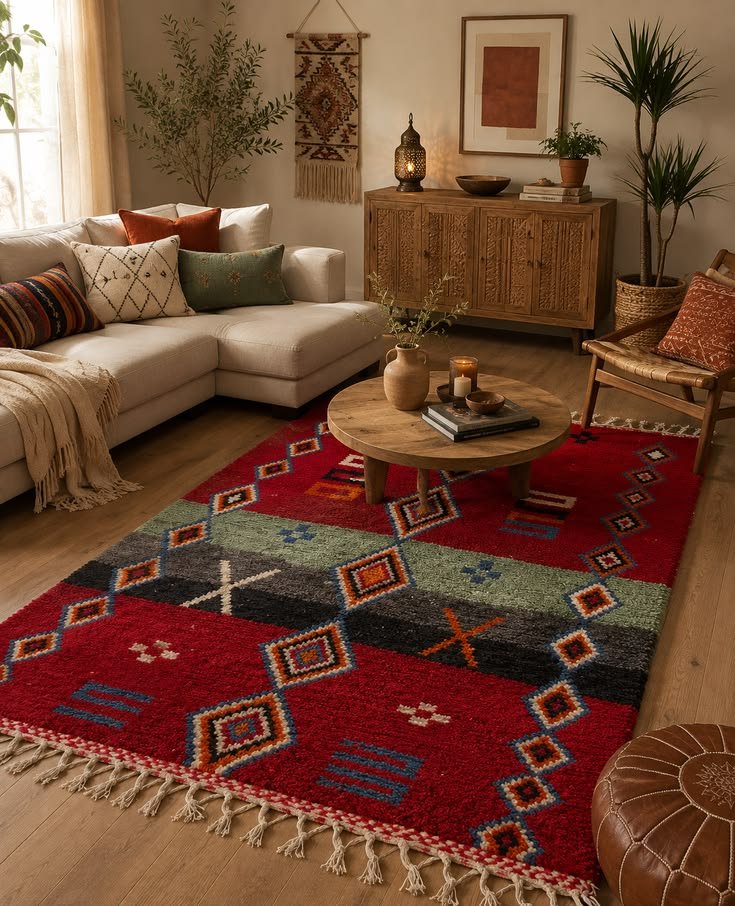
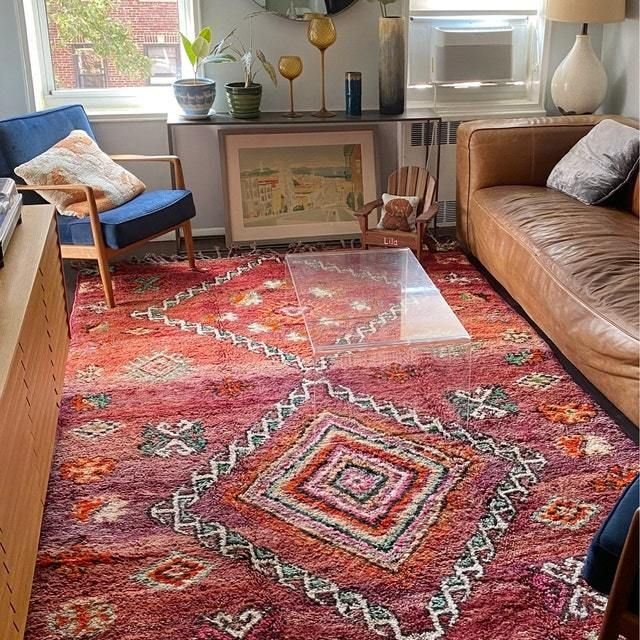
Before buying a Moroccan kilim rug, check more than just the colour and pattern. Construction, materials, condition, origin, size, and seller information all help determine whether the rug suits your space and whether its description is accurate.
- Check Whether It Is Handmade: Confirm whether the rug is genuinely handwoven or simply machine-made in a Moroccan-inspired design.
- Examine the Back: Look for a visible woven pattern rather than a printed surface or artificial backing that hides the construction.
- Check the Materials: Find out whether the rug uses wool, cotton, another natural fibre, or synthetic materials.
- Inspect the Weave: A quality kilim should have a reasonably firm, consistent flatweave without large unintended gaps or obvious structural damage.
- Look at the Edges and Fringe: Check whether they appear securely incorporated into the construction and whether there are signs of excessive fraying.
- Consider Small Variations: Slight irregularities can be normal in handmade rugs and should not automatically be treated as flaws.
- Ask About Origin: If authenticity matters to you, ask where the rug was woven and whether the seller can provide information about its production.
- Inspect the Condition: Vintage and older rugs may show signs of previous use. Check for weakened fibres, repairs, stains, holes, or damaged edges before buying.
- Confirm the Dimensions: Handmade rugs do not always follow standard machine-made sizing, so measure your space and compare it with the exact rug dimensions.
- Consider Room Use: Think about the level of foot traffic, furniture placement, and whether the thin flatweave construction suits the room.
- Check Care Requirements: Natural-fibre rugs may require gentler maintenance than synthetic alternatives, so understand how the specific rug should be cleaned before purchase.
Are Moroccan Kilim Rugs Good for Modern Interiors?
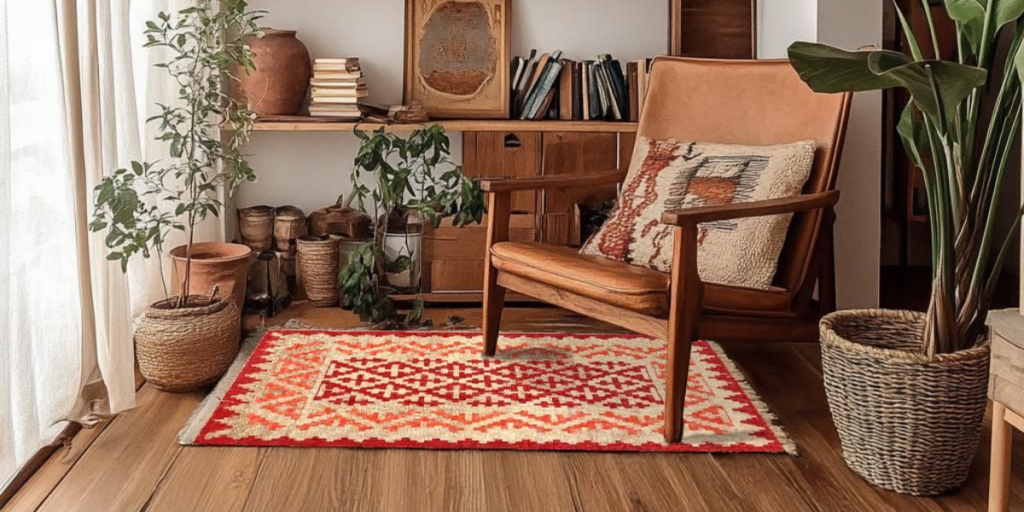
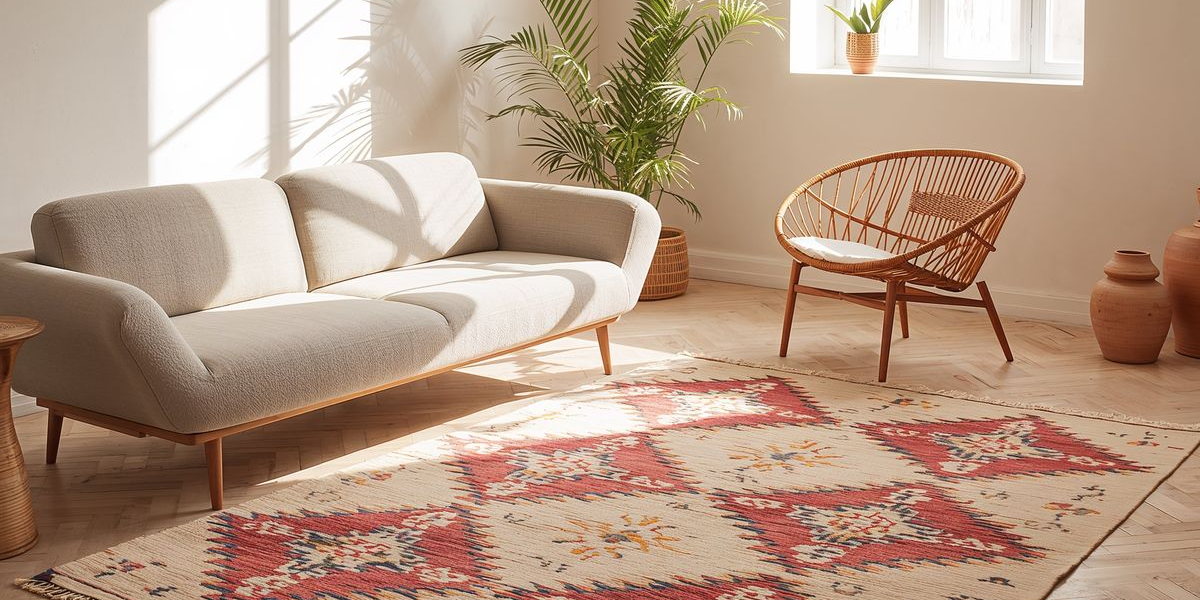
Yes, Moroccan kilim rugs work particularly well in modern interiors because their flat profile, geometric patterns, and natural texture can add visual interest without overwhelming the room. In minimalist spaces, a kilim can break up large areas of neutral flooring while introducing colour and pattern. In contemporary living rooms, its woven texture can soften clean furniture lines and harder materials such as wood, metal, or stone.
A design such as the Black kilim Berber rug can work especially well in modern spaces where you want a bold graphic element while keeping the overall palette grounded and versatile. Moroccan kilims also work well in layered interiors. A patterned kilim can become the focal point in an otherwise simple room, while a more neutral design can introduce texture without competing with surrounding furniture.
Wrap Up

Kilim rugs collection
Explore a diverse collection of rugs crafted for style and durability. From kilims to modern designs, find your perfect rug at Kilim Provenance.
The best way to determine whether a Moroccan kilim rug is authentic is to look beyond its pattern. Check the flatwoven construction, examine both sides, look for natural variations, inspect the fibres and edges, and ask about how and where the rug was made. Traditional Moroccan kilims are handwoven, so they often carry subtle signs of individual craftsmanship that machine-made imitations cannot reproduce in exactly the same way. Explore our Moroccan Kilim Rugs collection to discover distinctive flatwoven designs that bring traditional texture, geometric character, and timeless style into modern interiors.